
This week, I had the opportunity to attend a walkabout at Hoyt Arboretum with none other than Casey Clapp. Casey is an arborist, dendrologist, and co-host of the fantastic podcast Completely Arbortrary—a must-listen for fellow tree nerds or anyone just tree-curious.
The evening walk was called “Around the World in Trees,” a fun and fitting name for our global journey through the arboretum, spotlighting trees from six continents. Casey is an energetic speaker with an obvious and infectious passion for trees. Right from the start, it was clear we were in for a treat. Not only does he bring the science, but he also shares fascinating insights into how these trees thrive in their native environments—and what’s being done to conserve them.
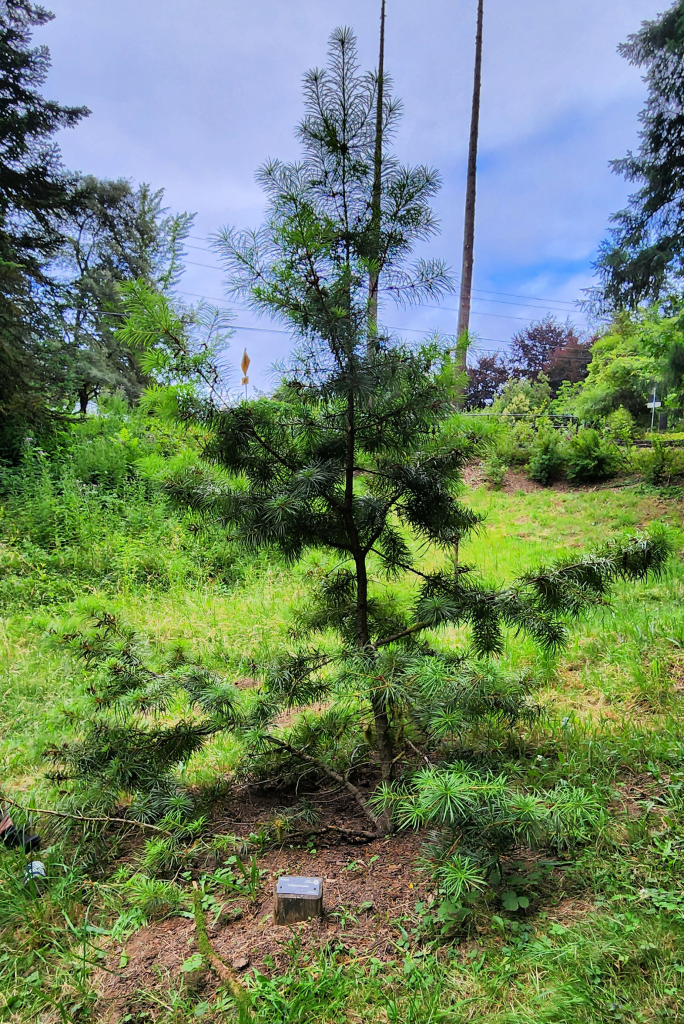
Cathaya argyrophylla
Our first stop: the Cathaya argyrophylla, a conifer from the Pinaceae family native to southern China. This tree is considered a “living fossil,” appearing in the fossil record about 140 million years ago. Thought to be extinct, it was rediscovered in 1938, though it wasn’t officially recognized until 1949. DNA evidence suggests that all pine trees evolved from this one—making the Cathaya argyrophylla the OG ancestor of today’s pines and spruces. How cool is that?
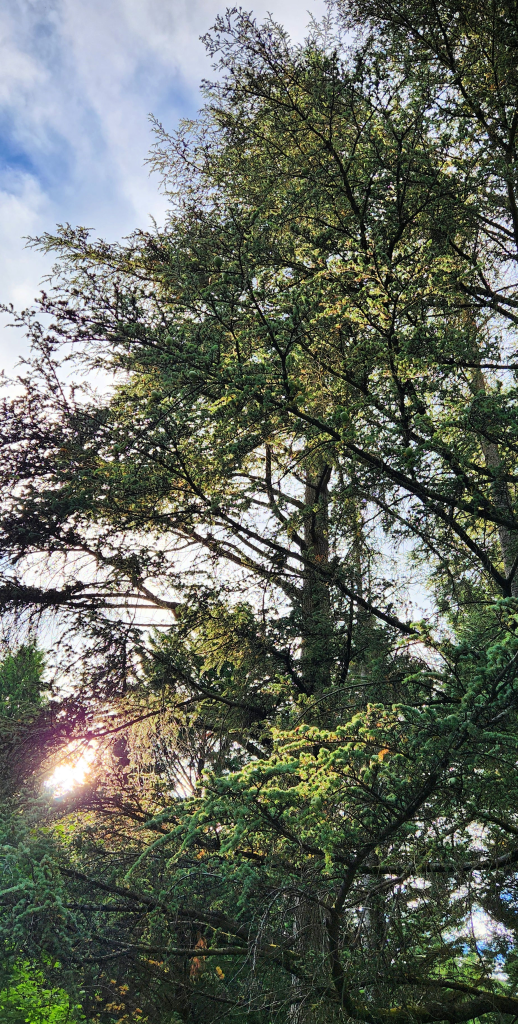
Lebanon Cedar
Another standout on our walk was the majestic Lebanon Cedar—a true cedar. I’ll admit, I was both floored and slightly dismayed to learn that the “cedars” I’ve long admired here in the Pacific Northwest are actually false cedars, part of the cypress family. (My whole tree-loving world just tilted a bit.) The Lebanon Cedar is native to the Middle East, and its numbers have sadly declined over the years. One of the last major groves, the Cedars of God in Lebanon, has been fenced off for preservation since 1876 and declared a heritage site over two decades ago. One fun fact? Its cones grow upward instead of hanging down. Nature always has a way of surprising us.
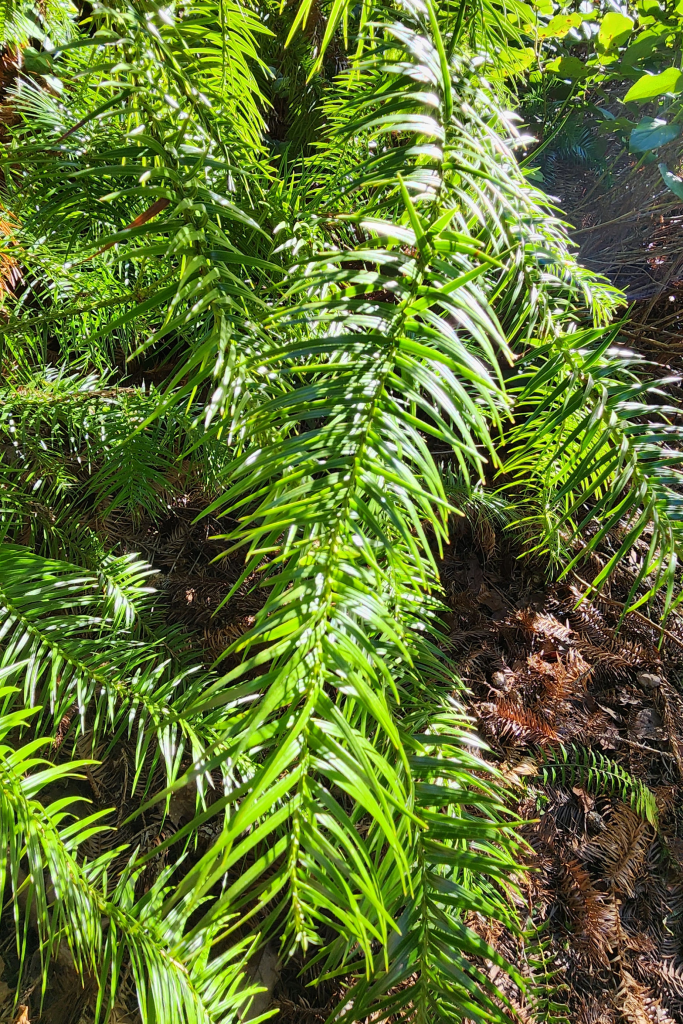
China Fir
Next, we stopped at a China Fir, which I had visited before on a walk with my friend. It’s a lovely tree—but don’t let the name fool you: it’s not a true fir. Like our faux cedars, it actually belongs to the cypress family. Native to China (and also found in Vietnam and Laos), the China Fir has soft but sturdy green needles that spiral around the stem. You’ll find it in the arboretum cozied up next to a Japanese Cedar—another non-cedar surprise!
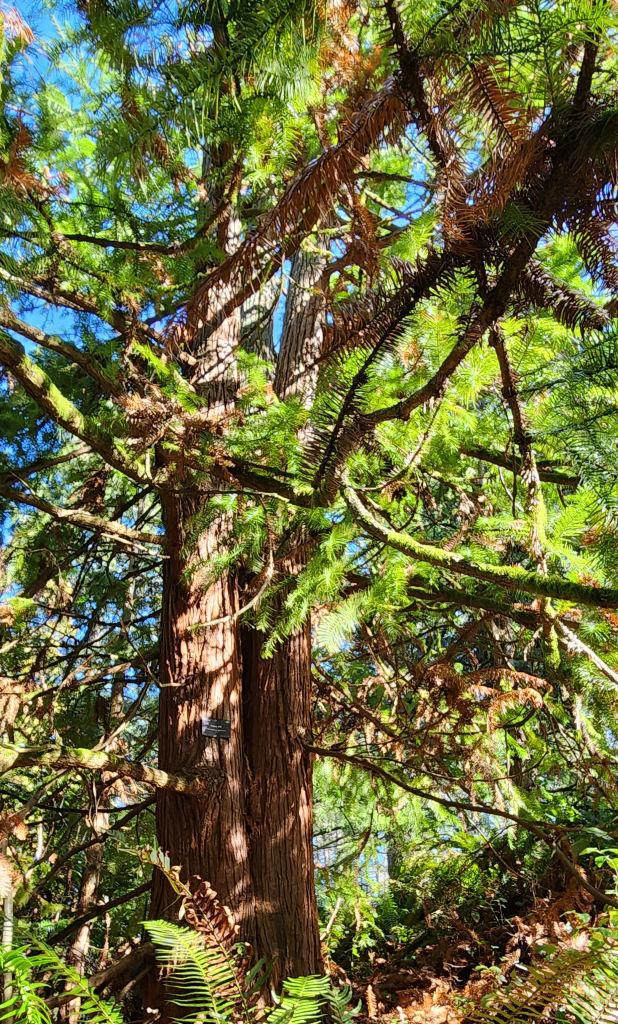
Dawn Redwood
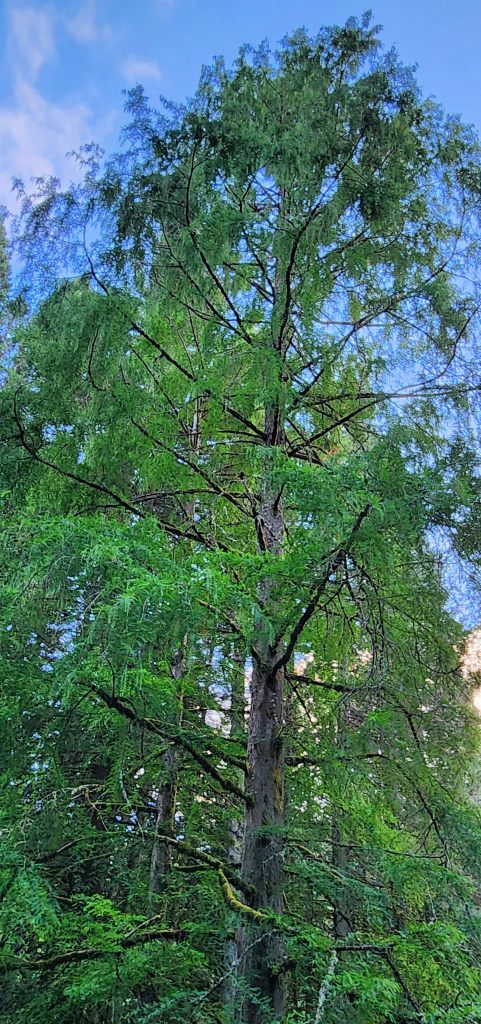
And then, we ended on a high note: my personal favorite—the Dawn Redwood. A cousin of the California Redwood and Giant Sequoia, this conifer is special because it’s deciduous, shedding its needles each autumn. It also boasts one of the best scientific names around: Metasequoia glyptostroboides—say that three times fast. Once thought to be extinct, it was rediscovered in fossil form in 1939, and by 1950, Hoyt Arboretum had received 50 of its seeds. The tree we visited was the first in North America to produce reproductive cones in at least 5 million years. Bonus trivia? The Dawn Redwood is both an Oregon Heritage Tree and Oregon’s official state fossil. Its ancient remnants have been found all across the state embedded in rock.
As a newly self-professed tree nerd, I couldn’t have asked for a better evening. It was the perfect blend of learning and wandering in the woods—a total win-win. While forest bathing is often a quiet, mindful experience, getting to know the trees by name and story makes the connection feel even more personal and meaningful.
If you ever get the chance to go on one of these walks with Casey, don’t hesitate. You’ll walk away with a deeper appreciation for the world of trees—and maybe even a new favorite.
One response to “Around the World in Trees with Casey Clapp”
Love this Kimberly, I had no idea of these non-cedars and non-firs. How oblivious am I??? Now I will go explore to the podcast, we can never know enough about our friends the trees.