
There’s nothing quite like stepping out of the car, breathing in that distinct, earthy forest air, and feeling the shift in your nervous system. For a forest bather, finding a new, peaceful pocket of nature is pure joy. And that’s exactly what I discovered recently at the very last rest stop on Highway 26 before the 101 Junction. Crossing the bridge over the South Fork Rock Creek, I found myself entering a wonderfully quiet, forested area – the trailhead for the Steam Donkey Loop Hike.
It was an instant summer escape, a perfect spot to immerse myself in nature’s embrace.
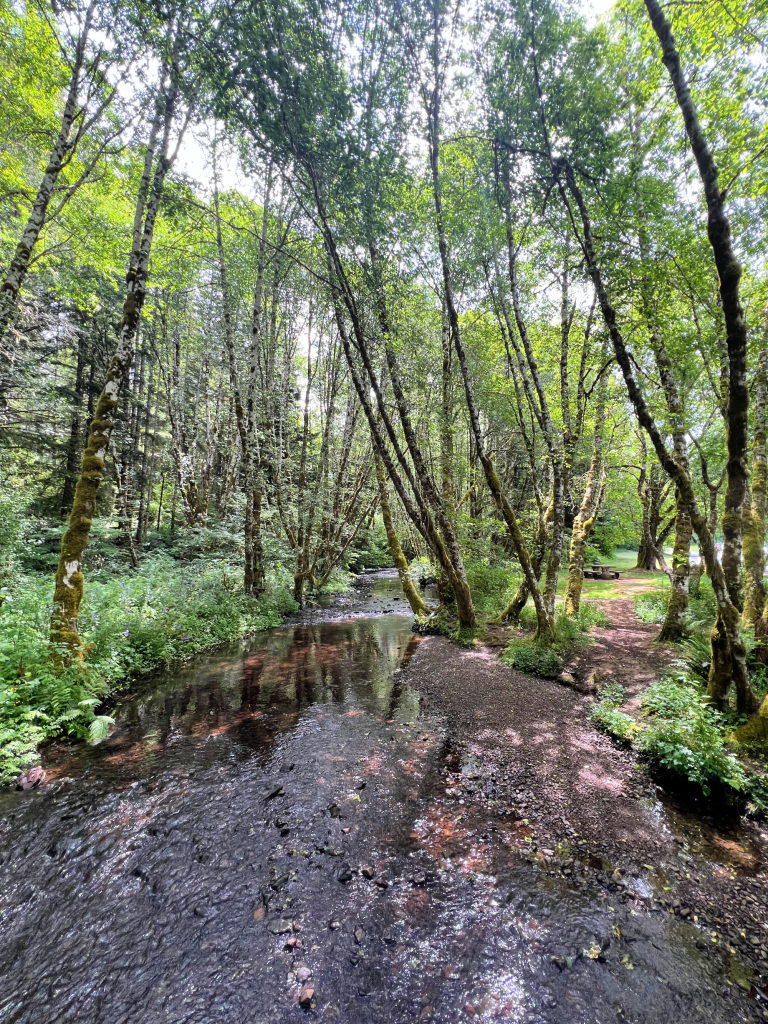
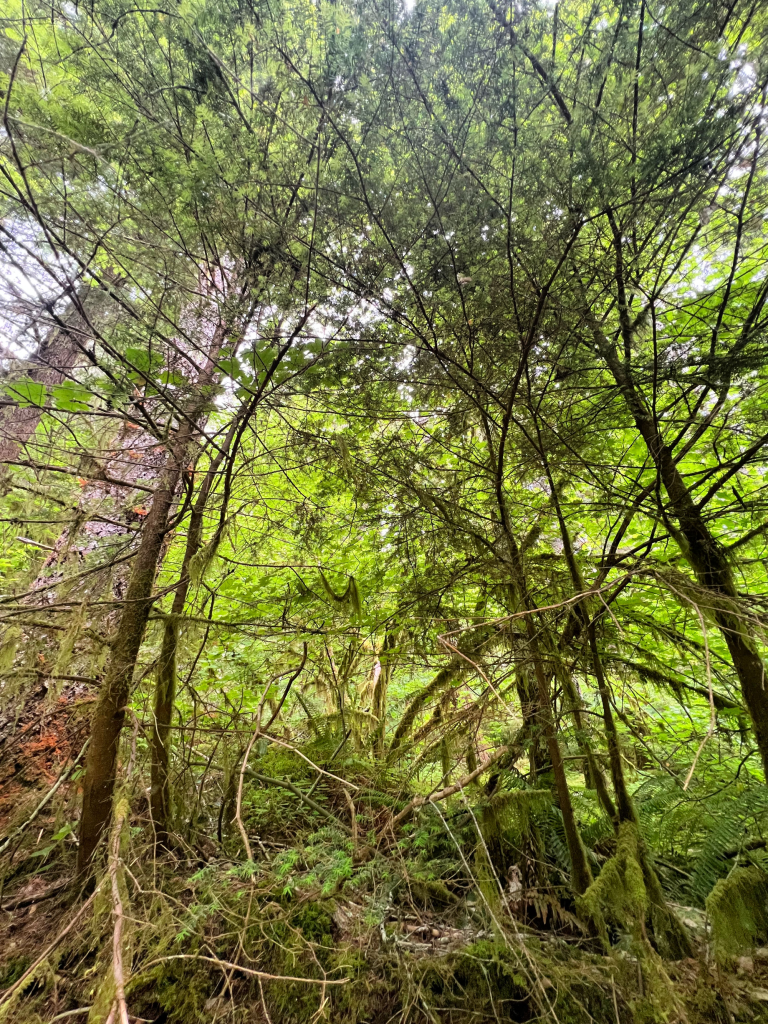
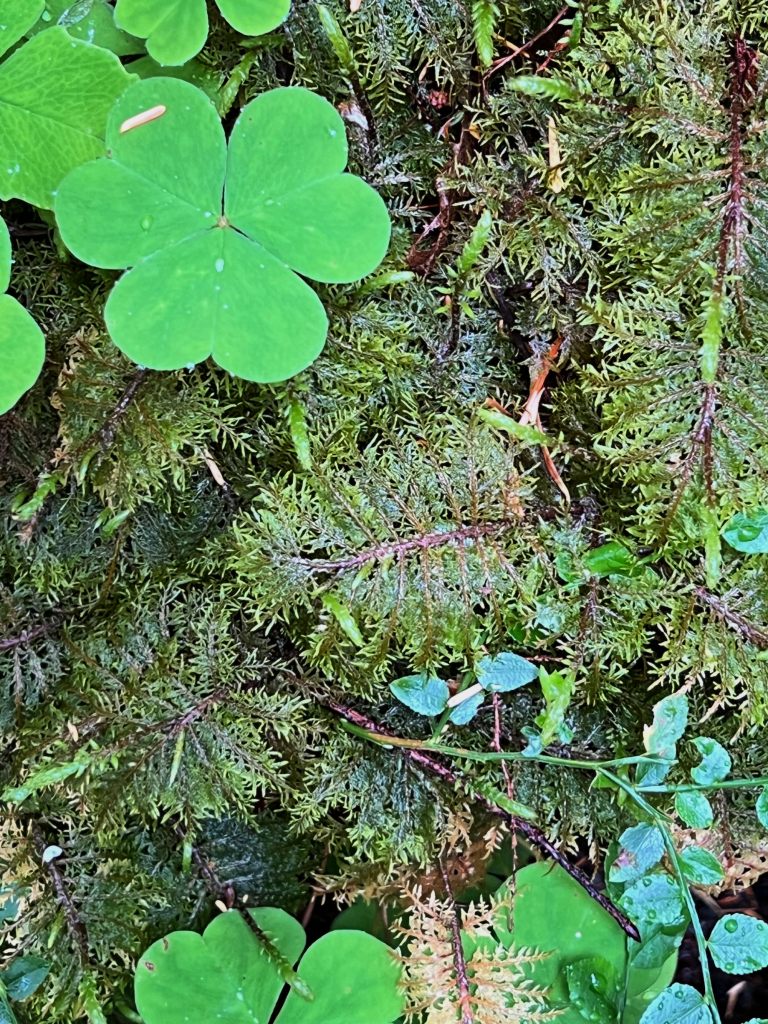
The Unsung Heroes of the Forest: Red Alder and Western Hemlock
As I meandered along the Steam Donkey Loop’s gentle path, two trees truly captured my attention: the Red Alder and the Western Hemlock. At first glance, they might seem like disparate species, but in this forest, they tell a fascinating story of collaboration and resilience.
What many don’t realize is the incredible symbiotic relationship between these two prominent trees. They’re intertwined by the very elements of nature – their shared soil conditions, their dance with shade, and the density of their growth.
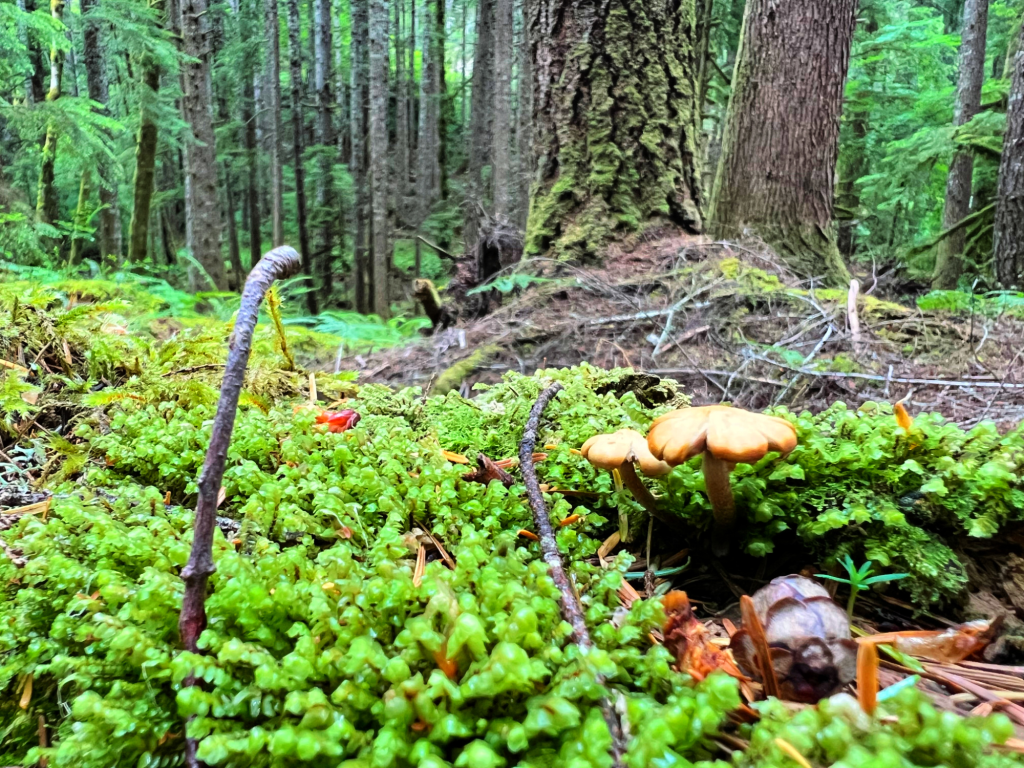
Nature’s Teamwork: Alder and Hemlock in Harmony
Here’s where the magic truly unfolds:
- The Alder’s Gift: Red Alders are nature’s generous partners. They are known for their nitrogen-fixing abilities, meaning they take nitrogen from the air and deposit it into the soil. This enriches the ground, providing vital nutrients that support their hemlock “colleagues” and other forest dwellers, essentially acting as natural soil improvers.
- A Dance of Succession: While alders grow more quickly in the early stages of forest succession, they are often eventually outgrown by the Western Hemlocks. As the forest matures, hemlocks become more dominant, a testament to their long-term adaptability.
- Finding Their Niche: Red Alders flourish in moist, well-drained soil, often found along stream banks and disturbed areas. Western Hemlocks, on the other hand, are incredibly adaptable, thriving in a broader range of environments and even tolerating less light, allowing them to thrive under the canopy that the quicker-growing alders might initially provide.
This intricate partnership creates a dynamic and healthy ecosystem, showcasing how different species contribute to the greater good of the forest.
Experience the Collaboration for Yourself
If you’re seeking a serene forest bathing experience and want to witness the magic of this collaborative pairing between the Red Alder and Western Hemlock firsthand, I highly recommend a visit to the Steam Donkey Loop. It’s a gentle, one-mile forest haven that offers a profound connection to the silent, yet powerful, interactions happening all around us.
Take a moment. Listen to the rustle of the leaves, feel the cool air on your skin, and observe the quiet partnership of these incredible trees. You might just find a deeper connection to the living world than you ever imagined.
Have you ever noticed the relationships between different trees on your forest walks? Share your observations in the comments below!